Reimagining Farmwall’s user experience — a digital education solution
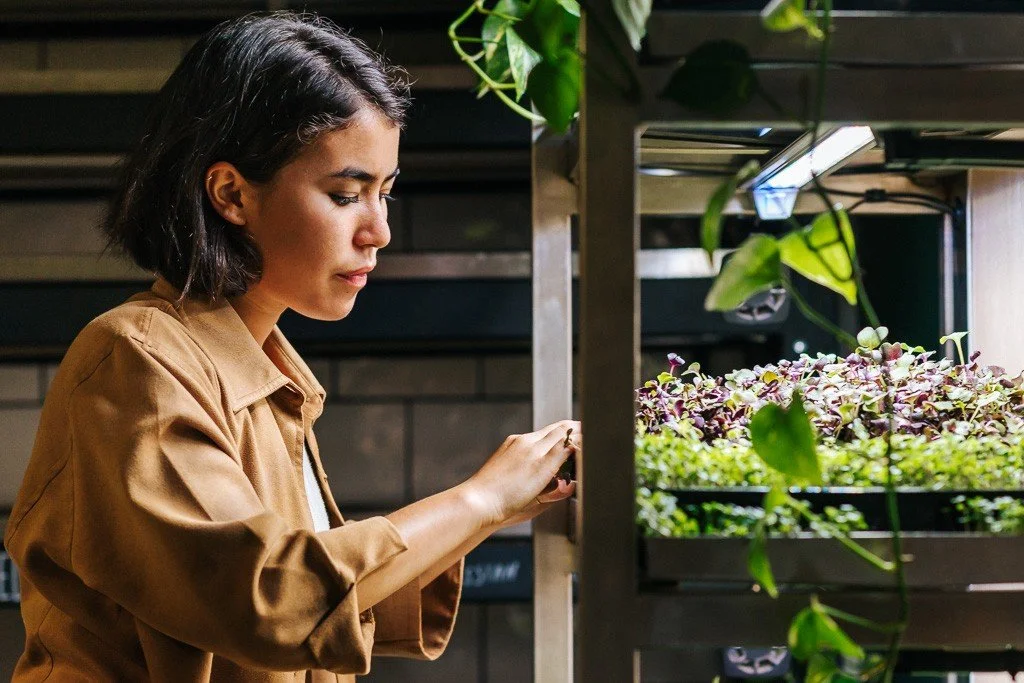
Above: CCO & Co-founder, Serena Lee inspects Farmwall’s microgreens | source: farmwall.com.au
Overview
Farmwall design beautiful vertical farms to cultivate highly-nutritious microgreens.
Previously using a business-to-business subscription model, Farmwall would place these vertical farms directly in businesses (food venues, corporate organisations), allowing their staff to harvest trays of microgreens at a time.
Farmwall is now looking toward a ‘vending machine’ business model; individuals would harvest the microgreens one serve at a time directly from the vertical farming unit. Microgreens become the focal point, and the vertical farms act as the innovative vehicle to drive consumption.
Farmwall came to General Assembly to work with us on our final 3-week project.
They wanted to develop an app which would act as a sales tool to boost communication and encourage engagement with microgreens.
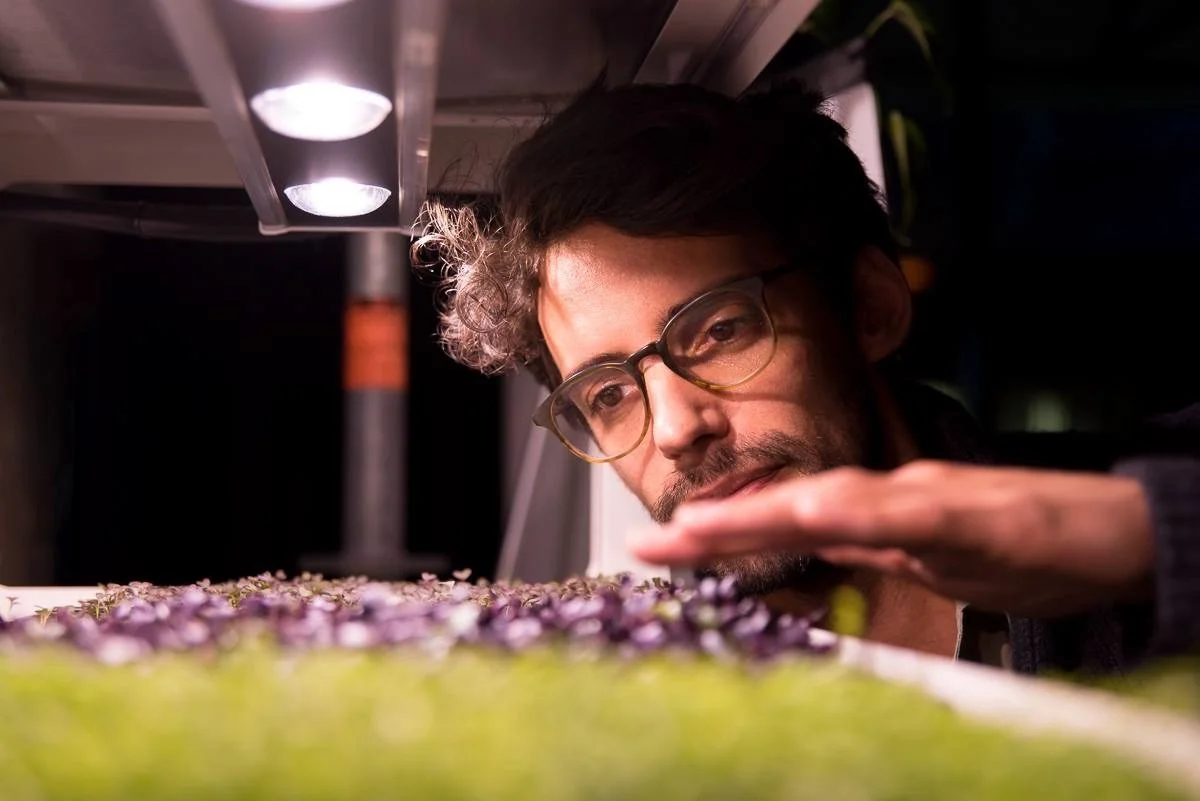
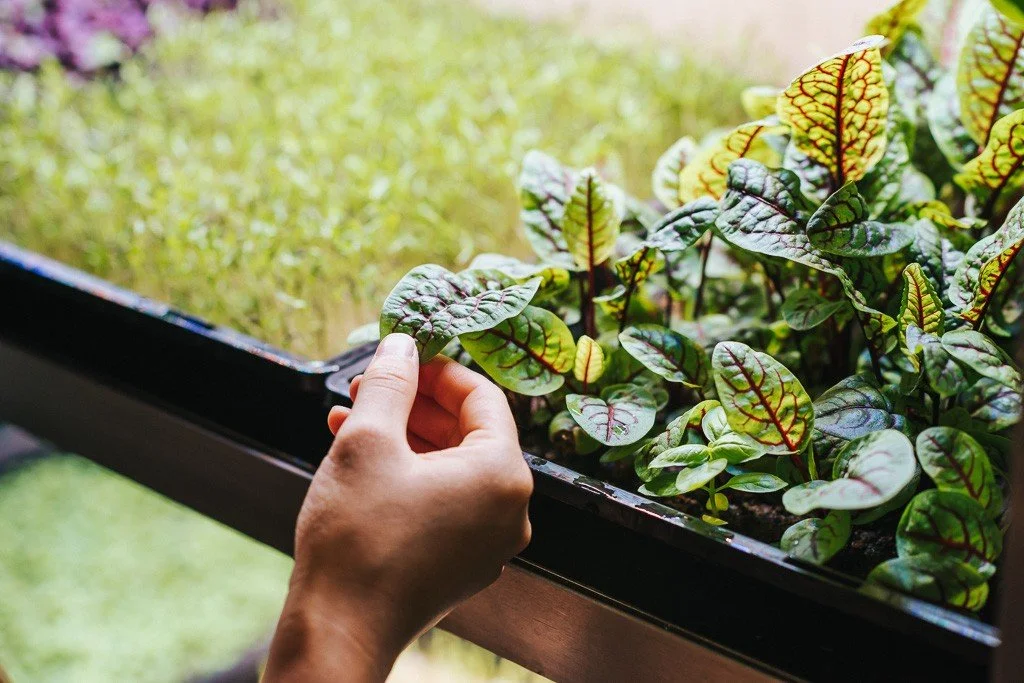
Above: CEO & Founder, Geert Hendrix inspecting a Farmwall | source: farmwall.com.au
Research
We interviewed with Farmwall and followed up with a workshop to understand more about their business. We went in to find out:
what exactly they are selling (microgreens? vertical farming? environmentalism?);
how they are selling it (their unique selling point);
why they are selling the product.
By doing this we gained an understanding of how Farmwall saw themselves and their position in the market, so we could later compare that against how their users viewed them.
We went on to conduct primary research with a mix of the general public, as well as freelancers from co-working space Worksmith, where people already have access to a Farmwall vertical farm. We talked about points such as nutrition, conscious consumerism, microgreens, and commitment to wellness.
From our primary research, we uncovered 3 huge findings:
19/20 participants interviewed did not know what a microgreen was;
unless a Farmwall staff member had been around to show them exactly how to use the vertical farm, anybody who had an opportunity to interact with the unit had not due to intimidation;
the vast majority of users highly valued health and nutrition in one way or another (diet, exercise, etc).
Uncovering Farmwall’s users
We also uncovered 2 personas. Daisy, our primary persona already has immediate physical access to Farmwall. For this project, we focused on her and her user journey.
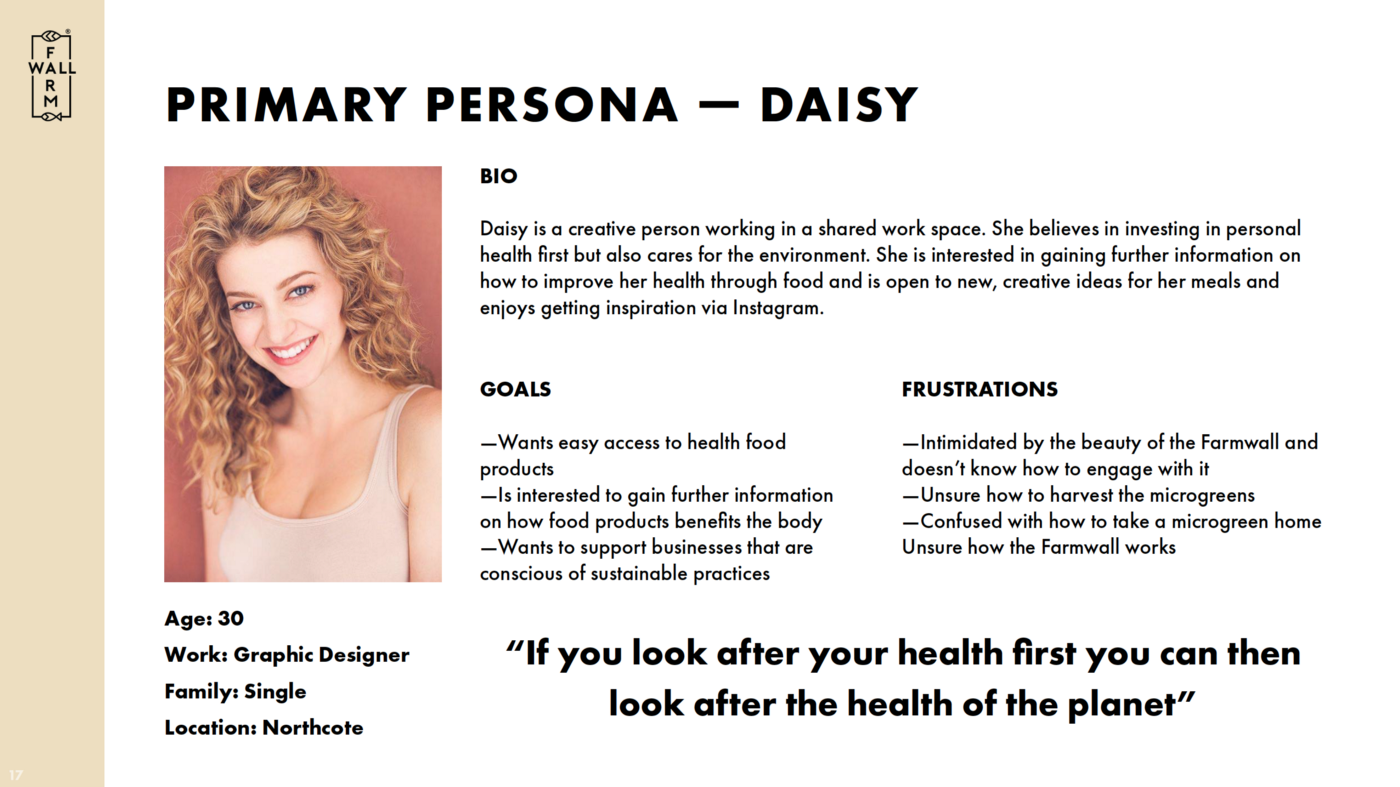
Above: Daisy, our primary persona. She wants to use microgreens but doesn’t know how
The problem
From the research synthesisation we uncovered a problem:
Daisy needs a way to access microgreens so that she can lead a healthy lifestyle.
We asked, how might we provide Daisy access to microgreens? We could do this by way of:
education of nutrition;
understanding of Farmwall and how their infrastructure works;
a digital solution that helps Daisy engage with the wall.
We hypothesized that:
By making microgreens accessible, we can provide encouragement for more people to interact with Farmwall.
My role
Working in a group with 3 other UX designers, I was responsible for the design direction of the project, including creating the mid–high fidelity prototypes and high-fidelity mock-ups of our proposed solutions. I was also an equal facilitator in the team with conducting primary research (interviews and contextual inquiries), synthesisation of research, ideation, and usability testing.
Solution conception and ideation
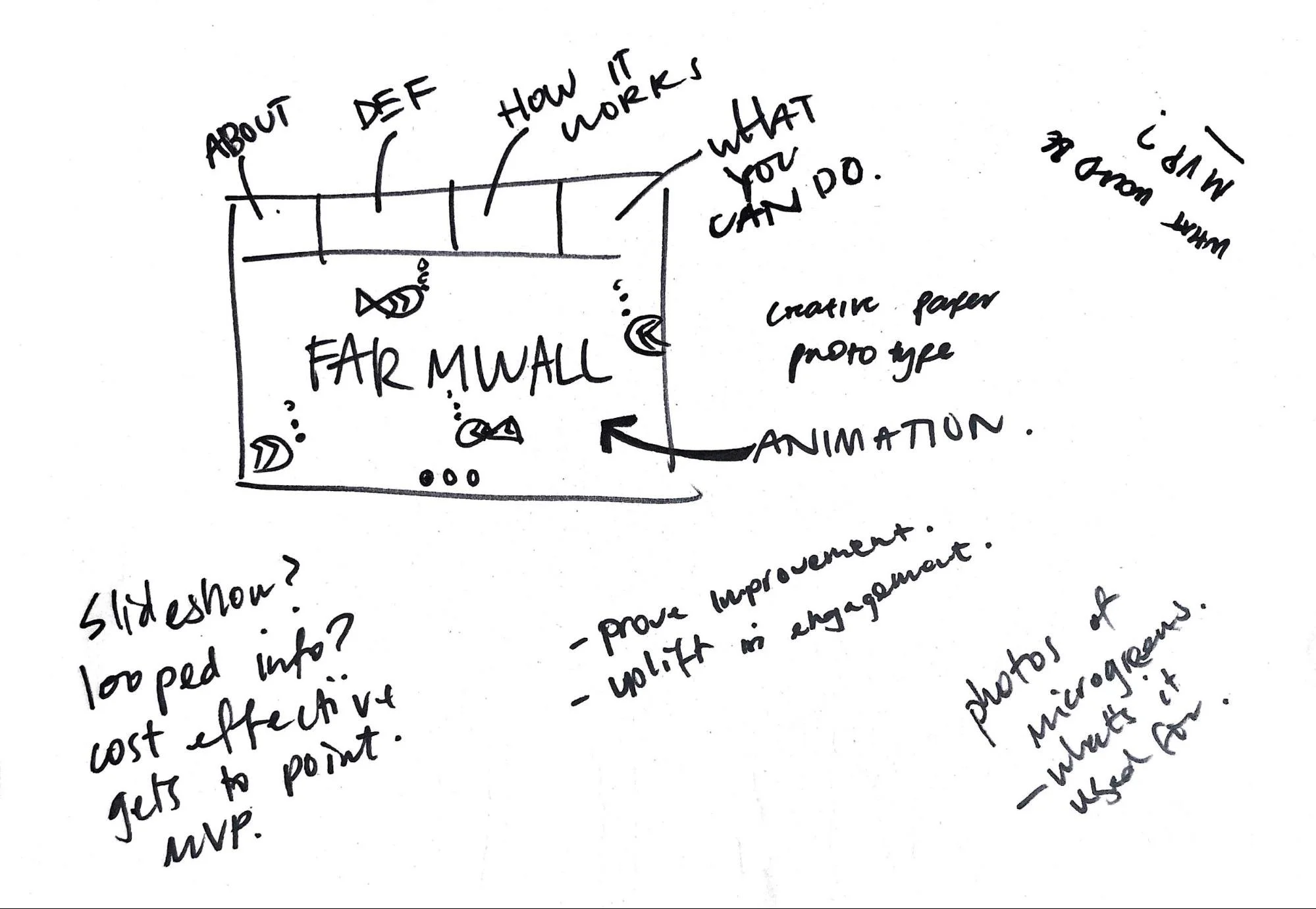
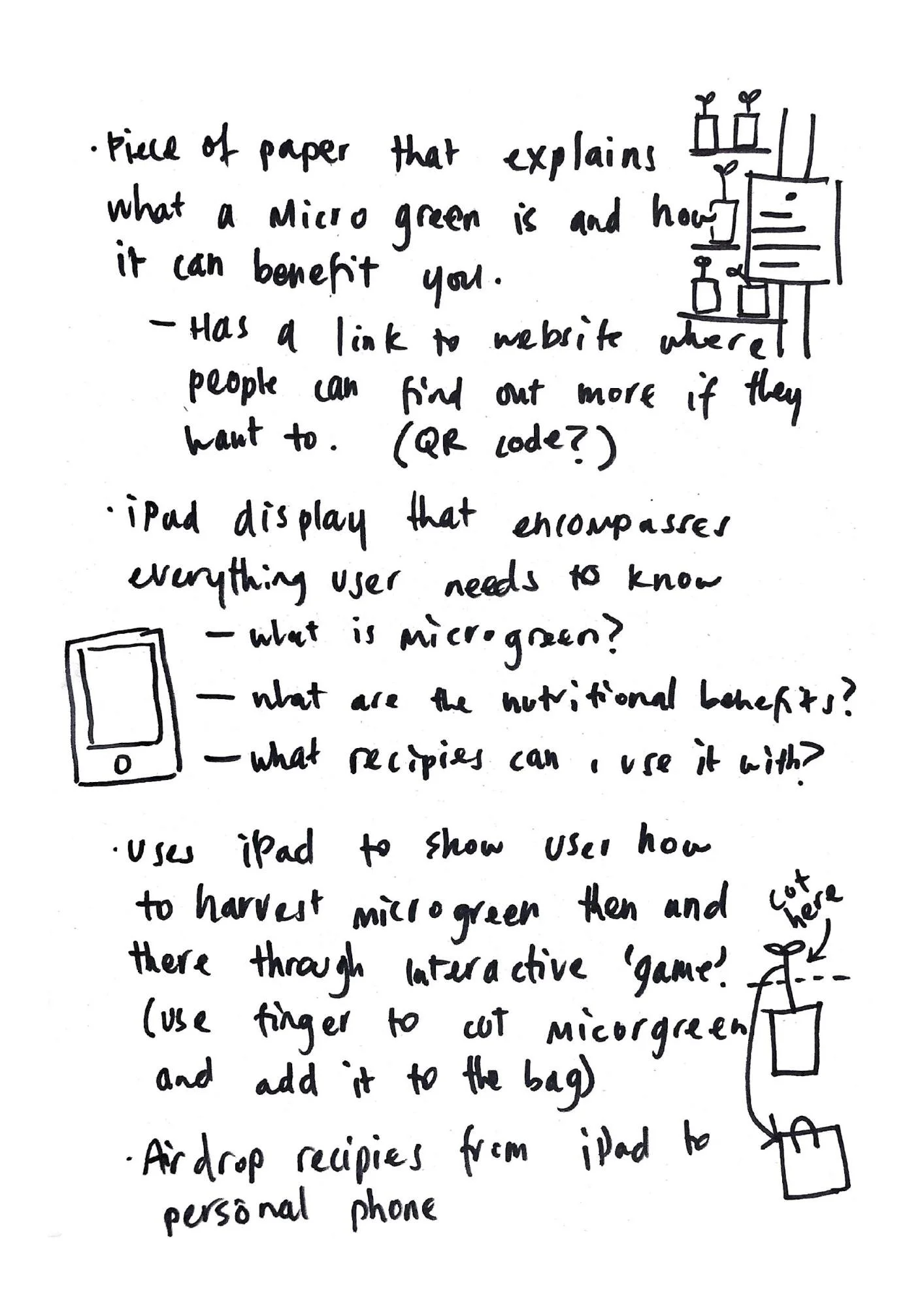
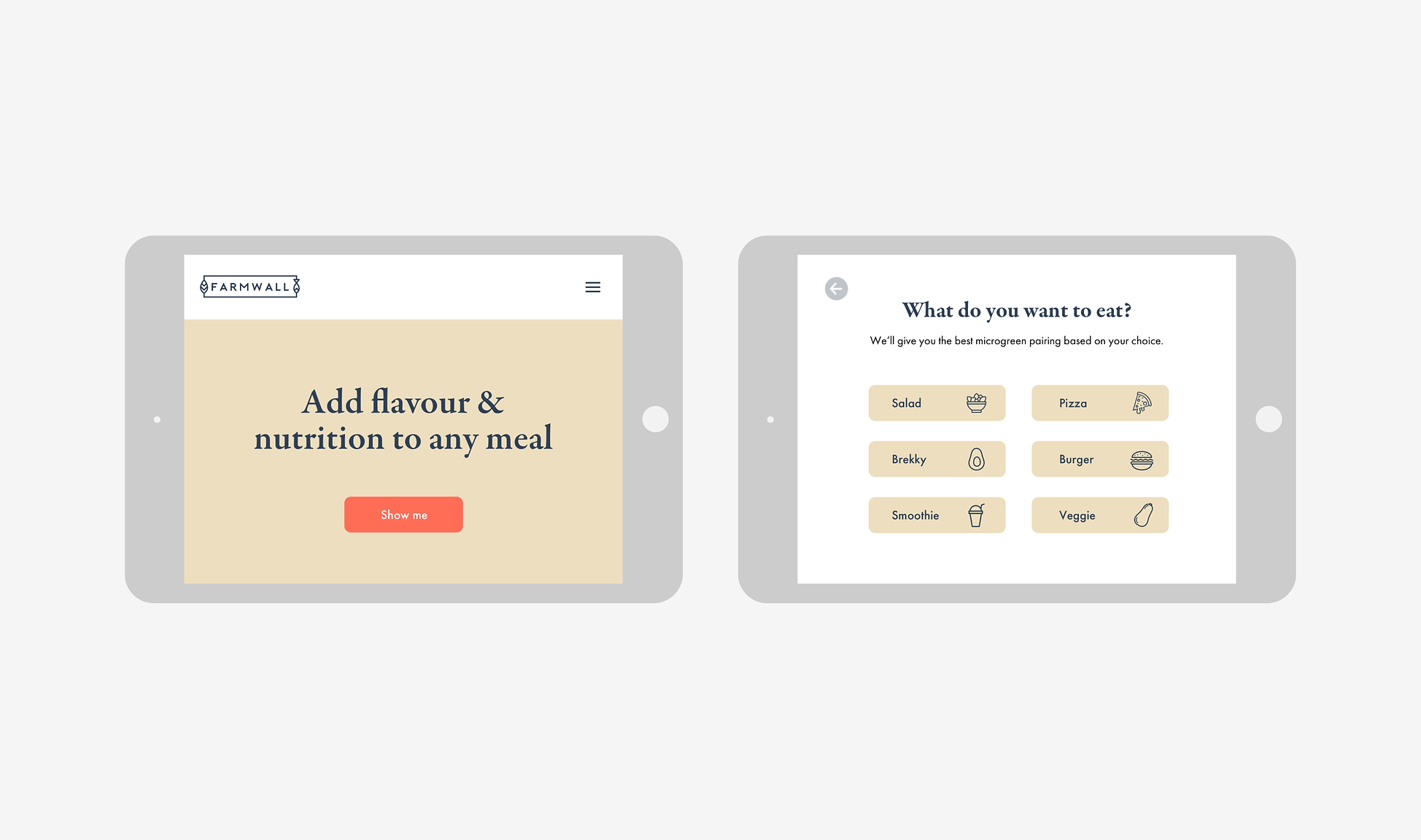
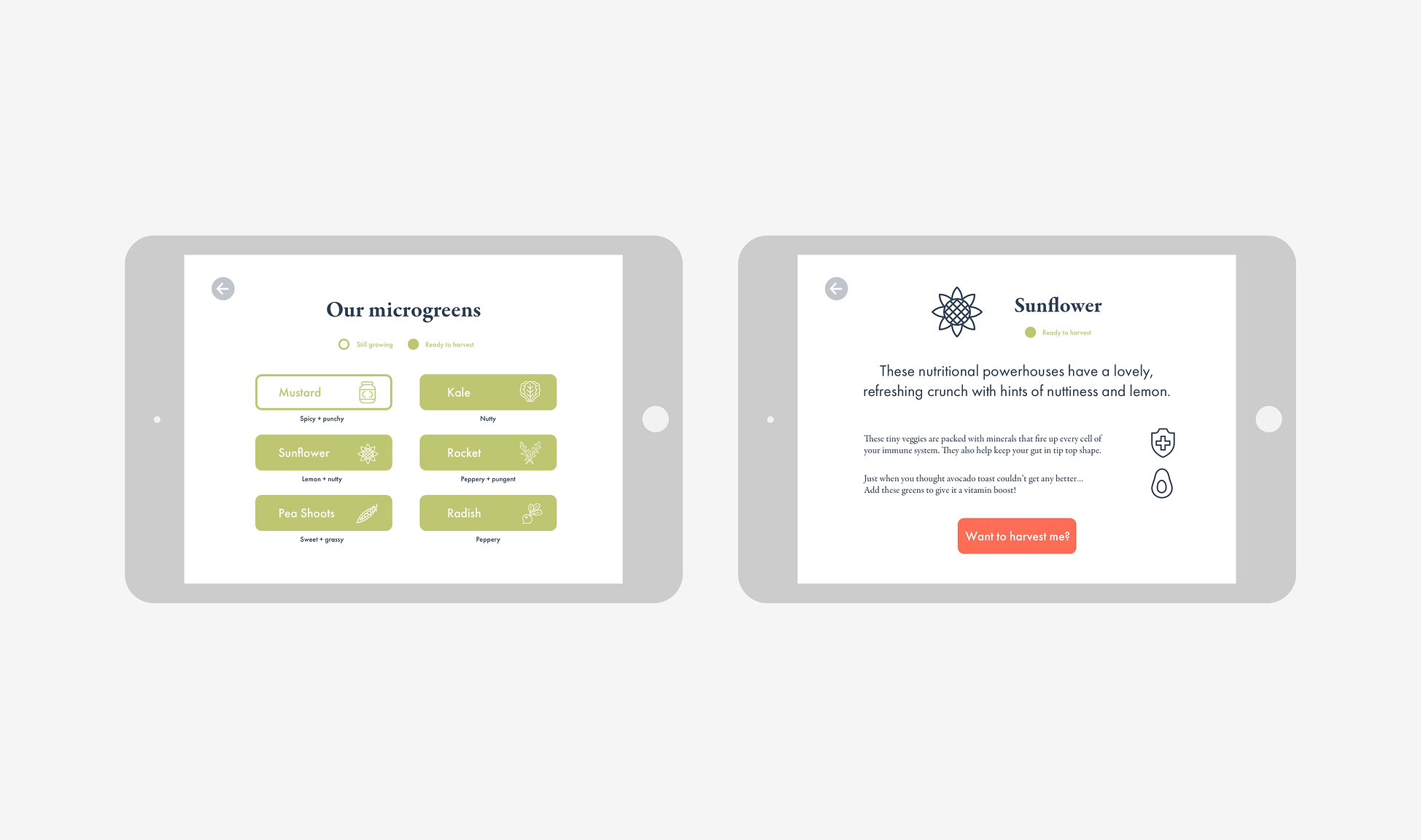
Above: A digital solution housed in an iPad that would sit next to the vertical farm. It would educate Daisy aroound the three major insights uncovered in research
Although we were asked to design an app to act as a sales tool, we would first need to educate Daisy on Farmwall and their product.
Due to Daisy’s lack of cognitive access to Farmwall and microgreens (education) but immediate physical access (vertical farming units at her workplace), we needed to bridge the gap between the two so she could be encouraged to use Farmwall and its product.
In a sketching ideation session, we decided that we could bridge the gap between physical and cognitive access in a solution that was 3-fold:
A digital solution housed in an iPad that would sit next to the vertical farm. It would educate Daisy around the three major insights uncovered in research:
who Farmwall is, their mission, and how their vertical farms work;
what a microgreen is and how to harvest one;
how Daisy could use her microgreens for flavour and nutrients.
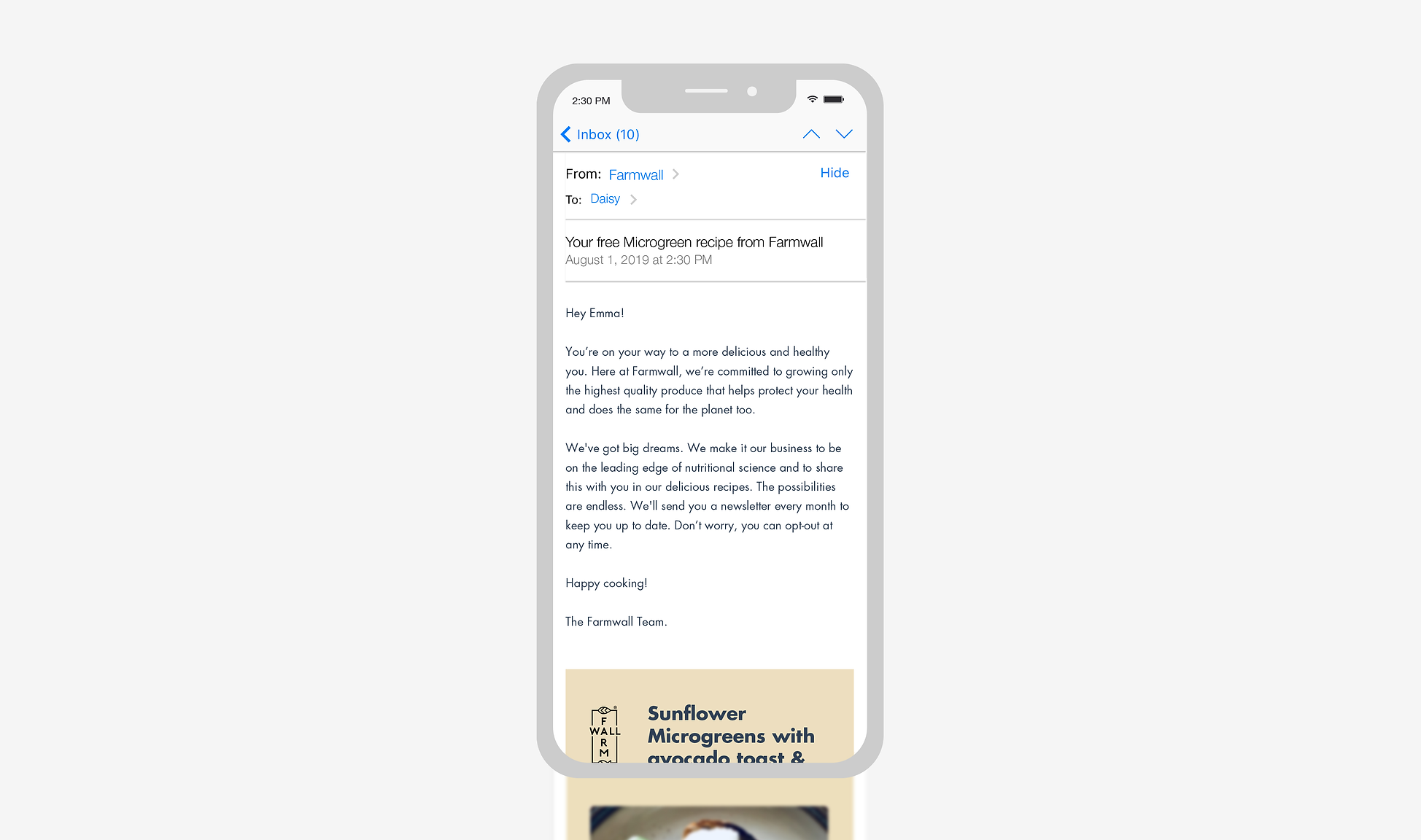
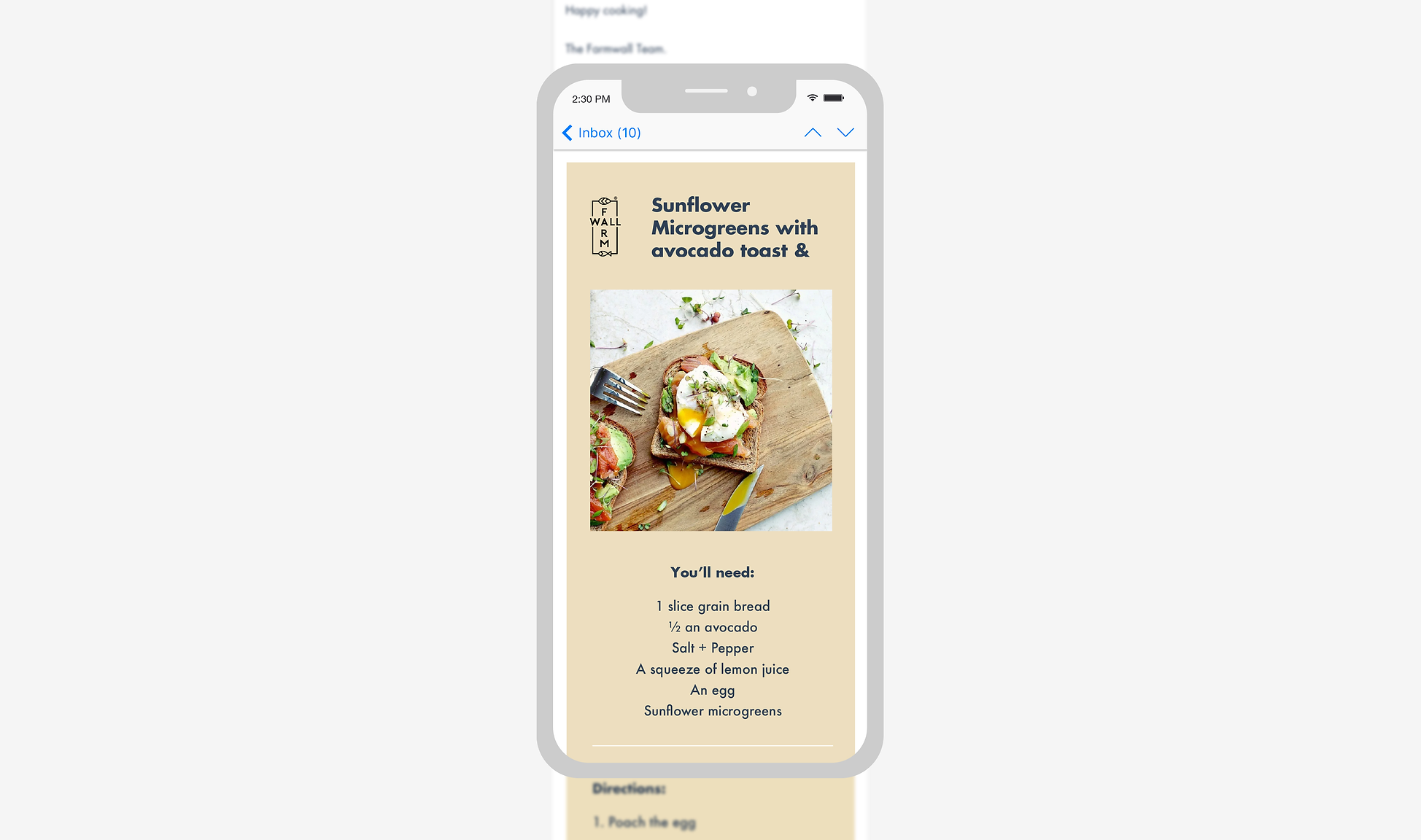
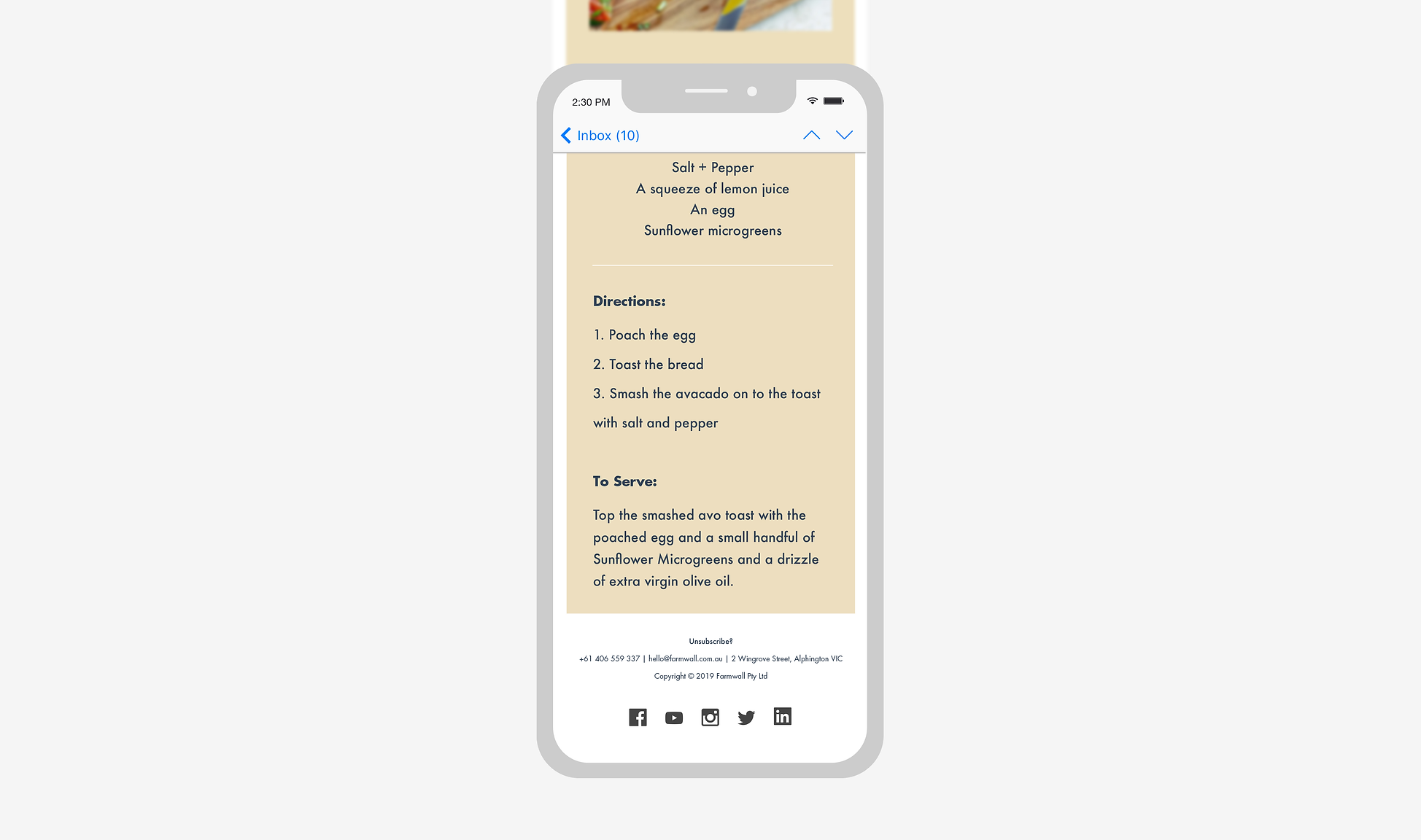
A recipe sent to Daisy’s email that taught her how to use the microgreen she just harvested.
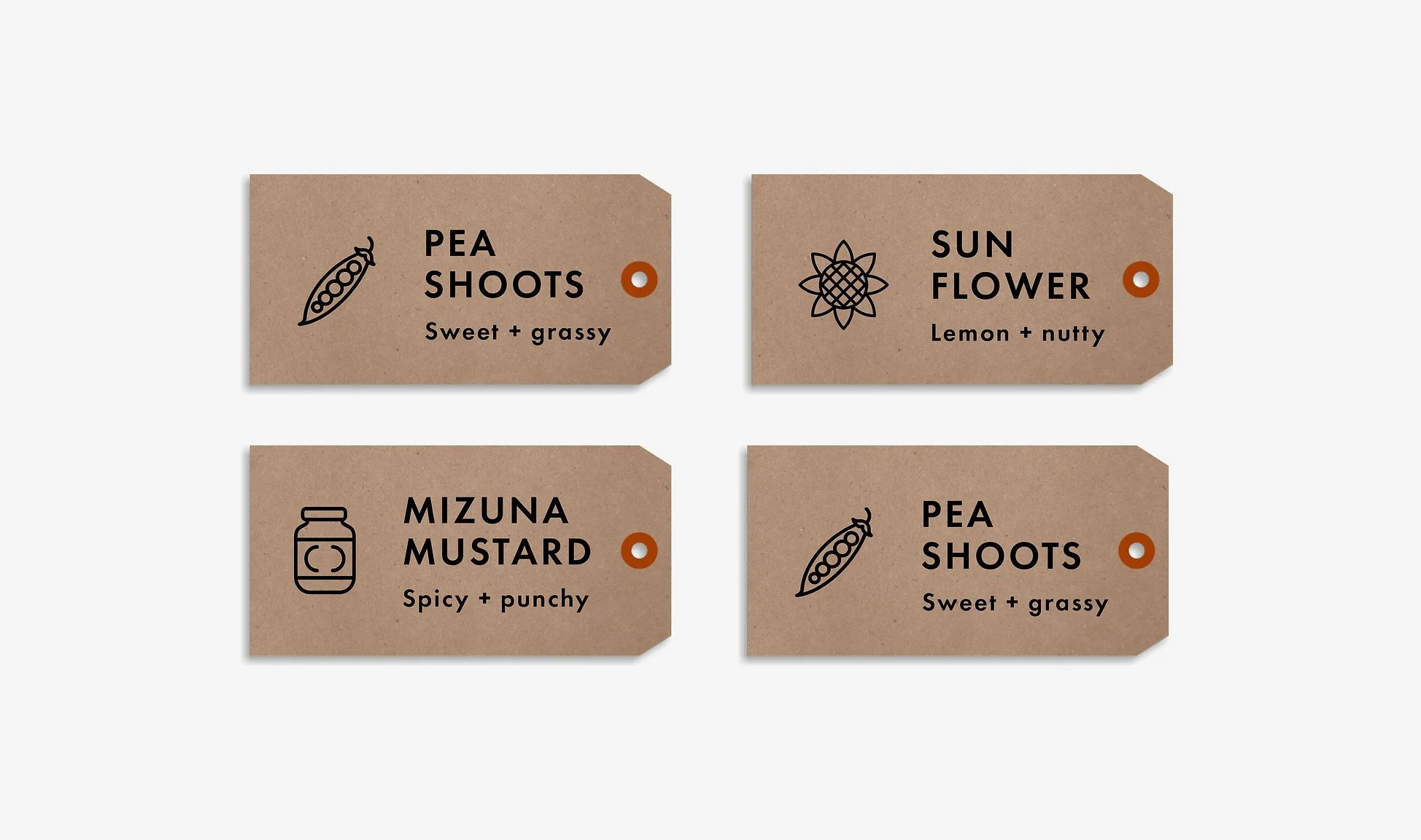
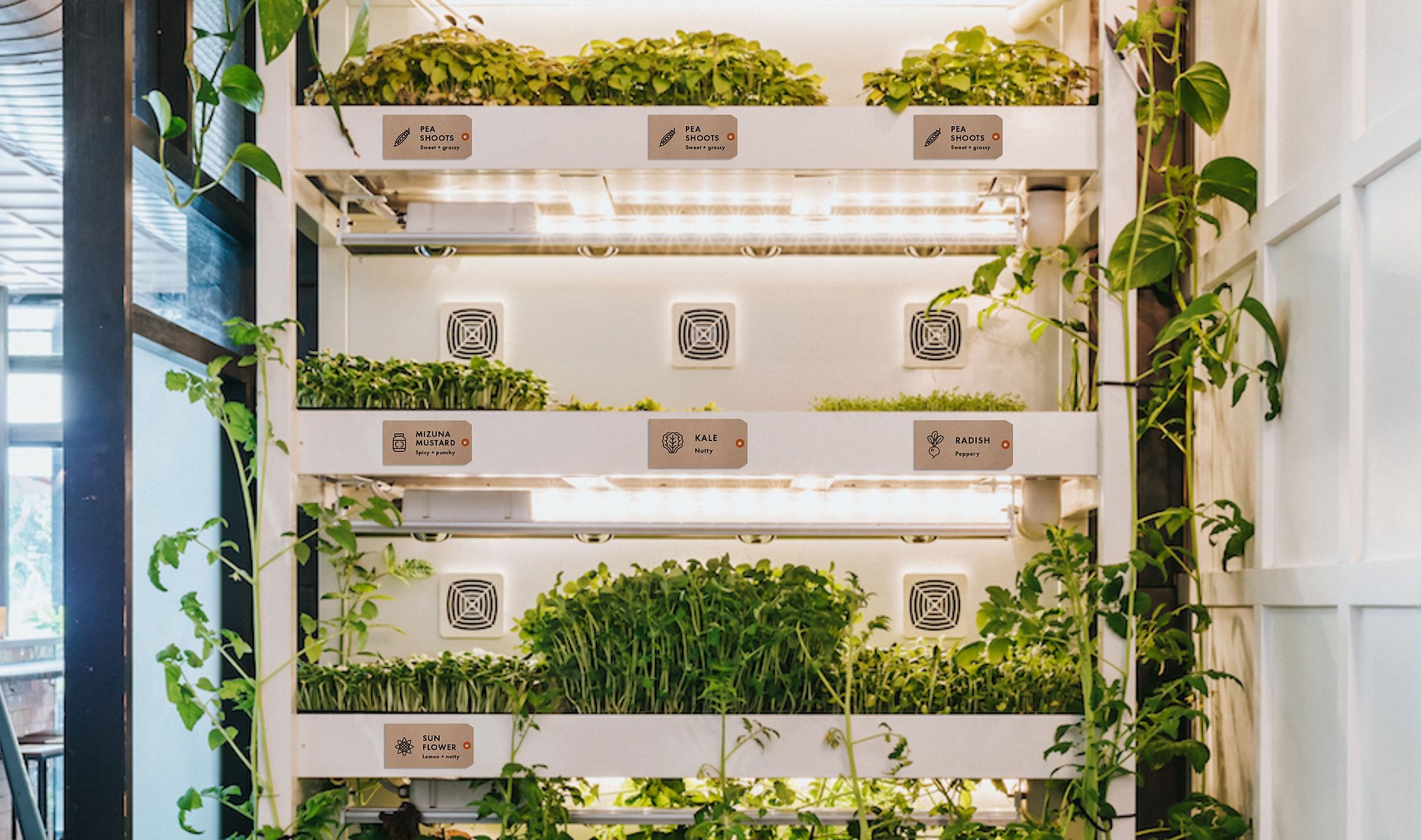
Profile tags that would sit on the vertical farm next to its respective microgreen.
They would display the microgreen name and suggested meal/nutrition pairing. Once Daisy had used the iPad once to learn the 3 above points (Farmwall’s who, what, how), she could return to the farm to get exactly what she needs for her next meal.
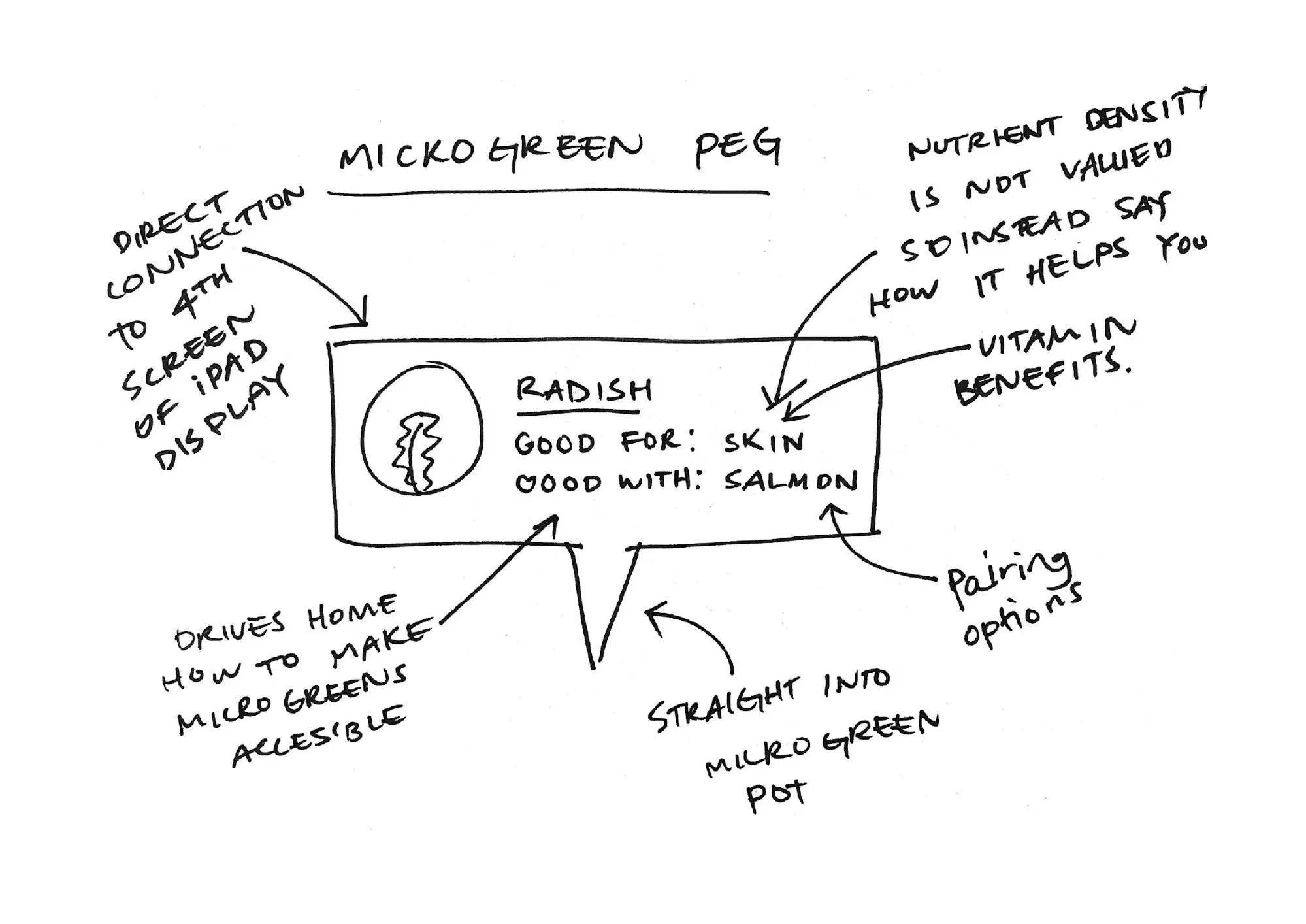
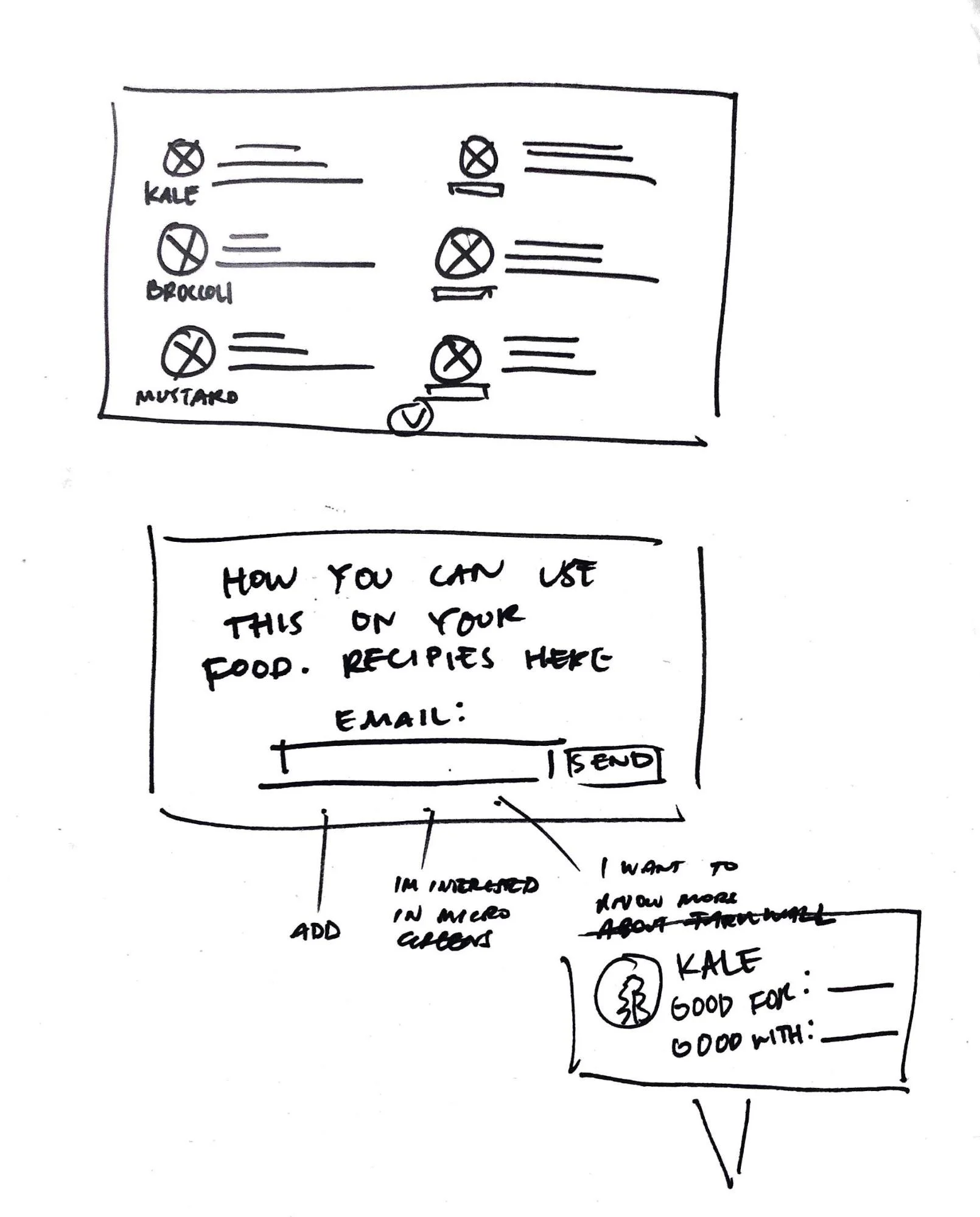
Above: Profile tags that would sit on the vertical farm next to its respective microgreen.
Developing our digital solution
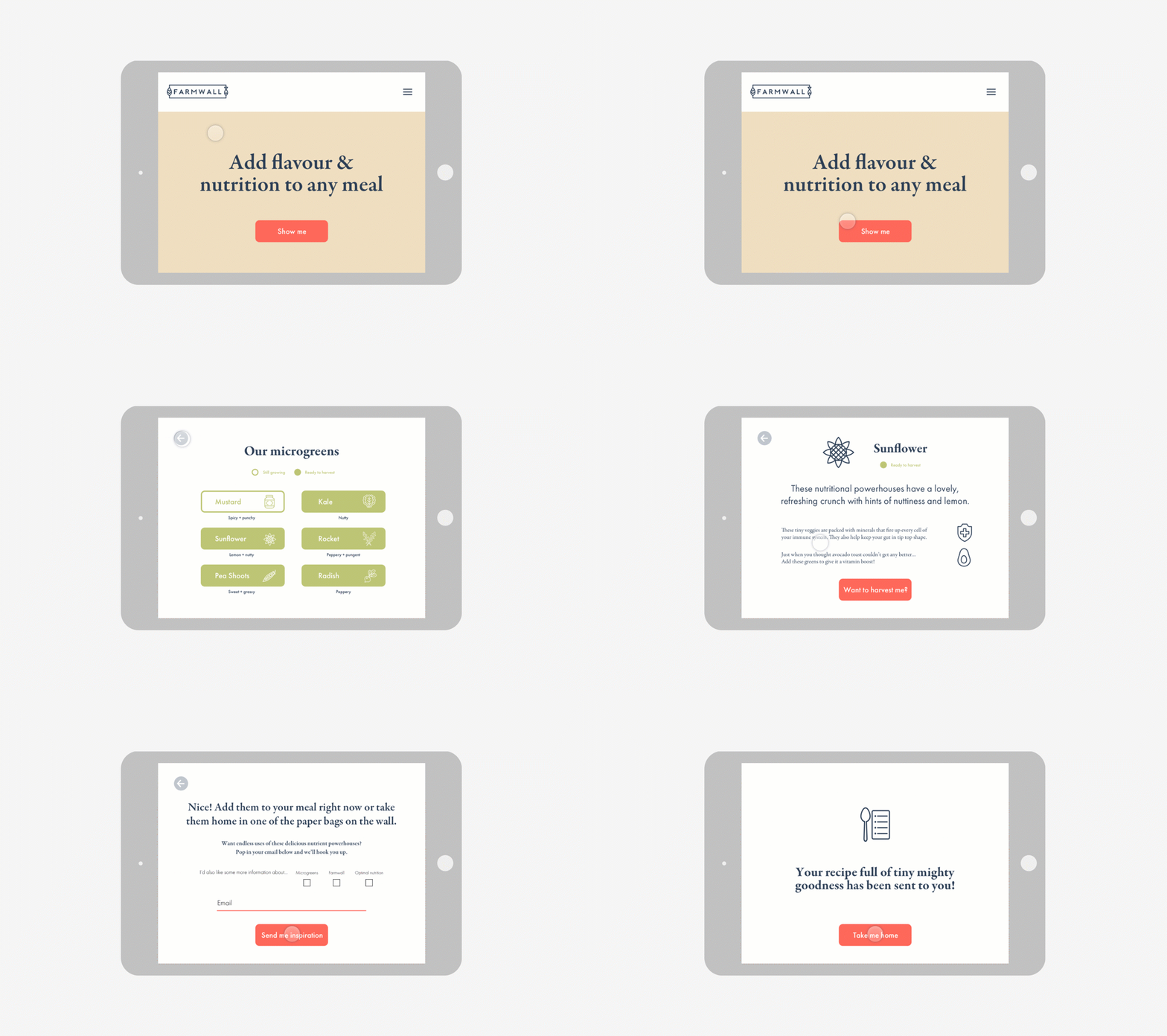
We started with a paper prototype to make quick iterations and sift through the ideas that weren’t working. We conducted four rounds of usability tests. Each round of testing led to appropriate design iterations, eventually leading us to a product that was usable and accessible for Daisy.
We tested at Worksmith where there was a farming unit. Testing in context gave us results that would not have been achievable otherwise. We were easily and quickly able to guerrilla test in context and ask certain questions about the farm — particularly to do with harvesting — using it as a visual aid there and then.
Round 1 iterations based on feedback
“This is the fourth page and I’m still not told what to do”
“I’m taking something straight off the wall…how can I use it? I don’t want to know about Farmwall.”
This created a catalyst for some significant changes. We found our initial design caused boredom because it was too focused on Farmwall and its mission, and not enough about Daisy’s user journey — “What is a microgreen?”, “How do I harvest one?”, “How can it benefit me?”.
“These claims mean nothing to me. Be careful with percentages.”
We dropped the science talk.
“I’m never sure if you should take it. Is it ready to harvest? At what point does it stop growing and I can harvest it?”
We gave users a better ‘how-to’ guide on harvesting a microgreen. We later added a ‘traffic light system’ so Daisy knew when to harvest.
Round 2 iterations based on feedback
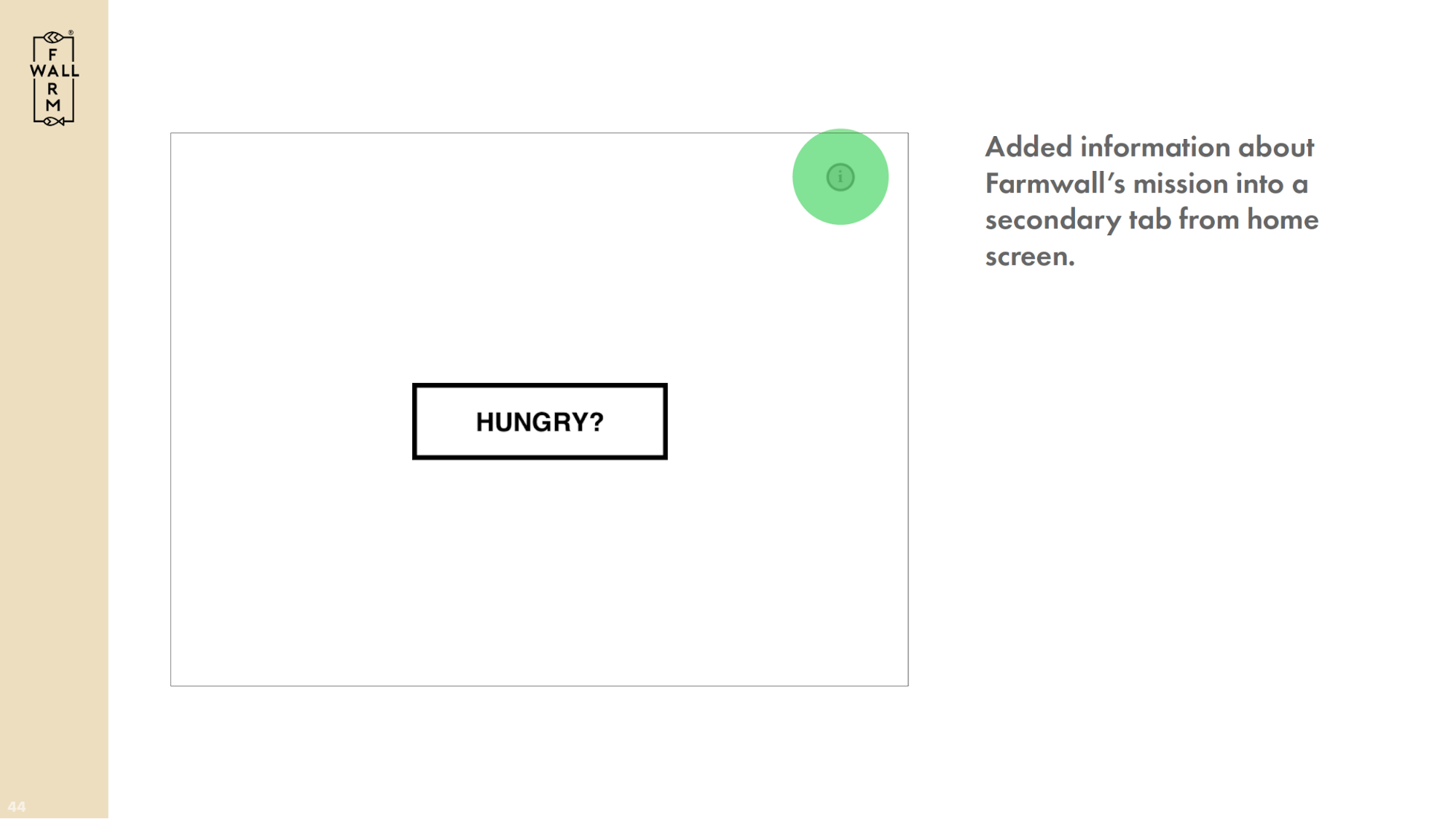
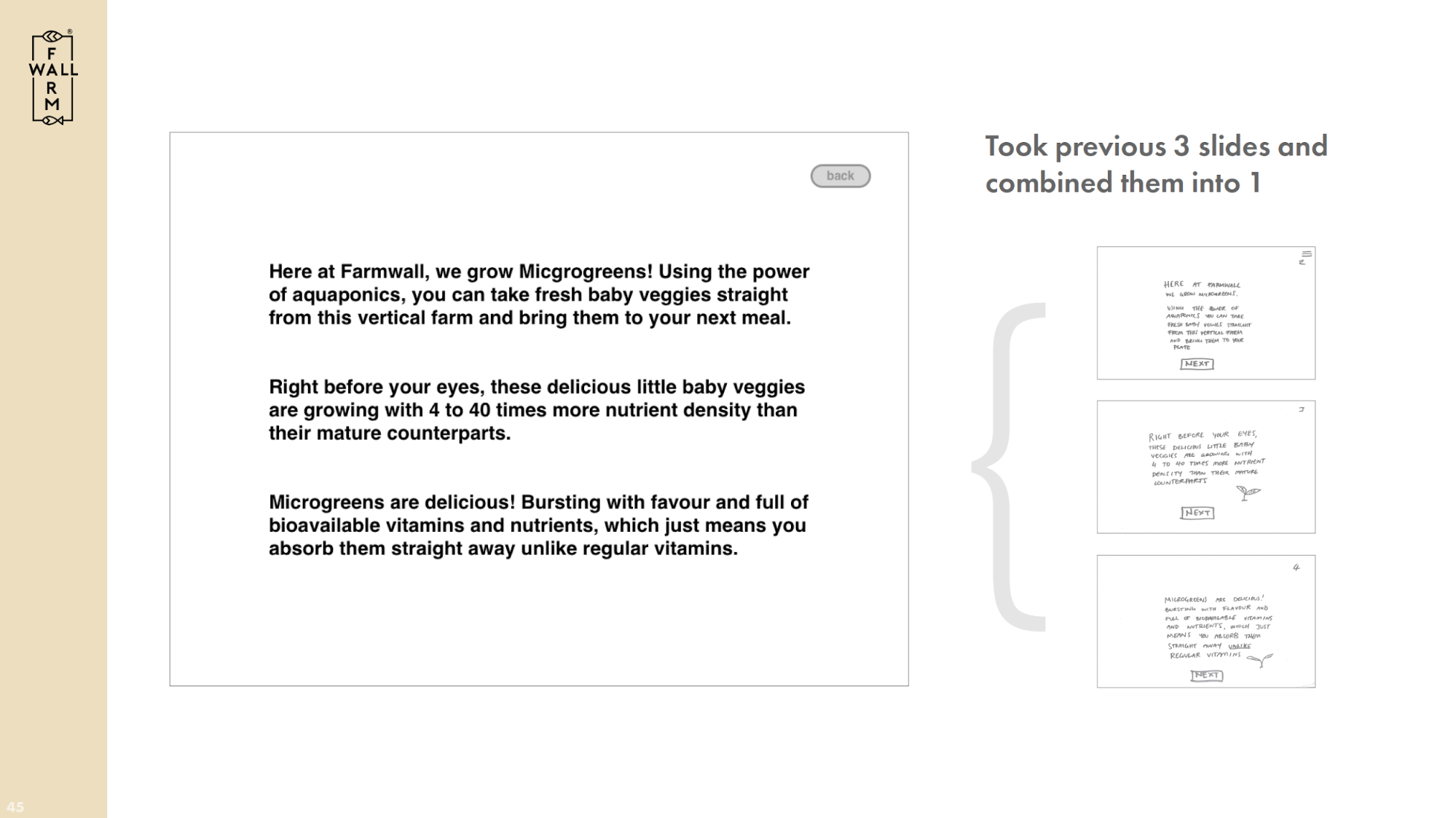
Above: “This is the fourth page and I’m still not told what to do” — we combined 3 slides into 1 and made it secondary to the user journey
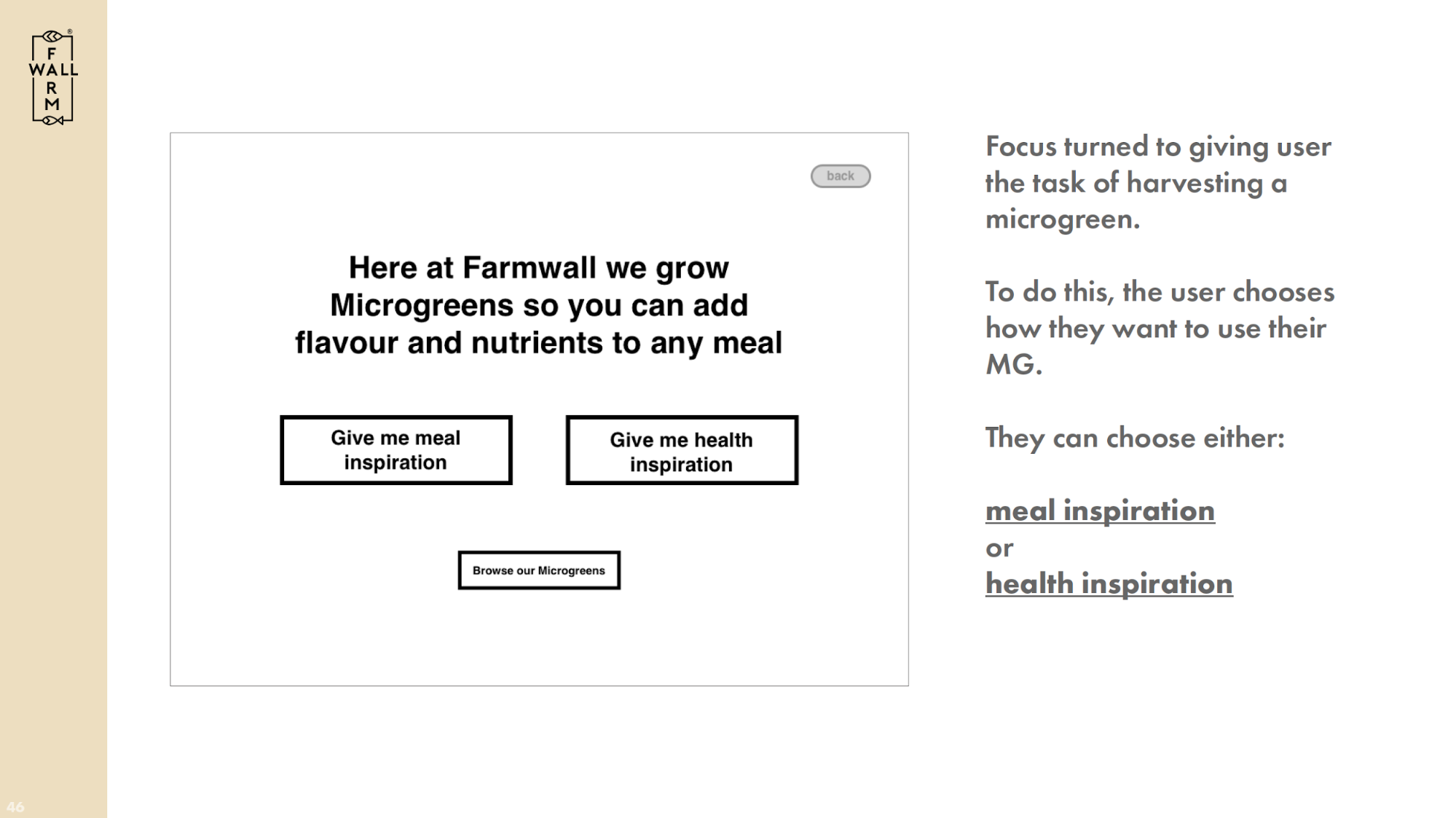
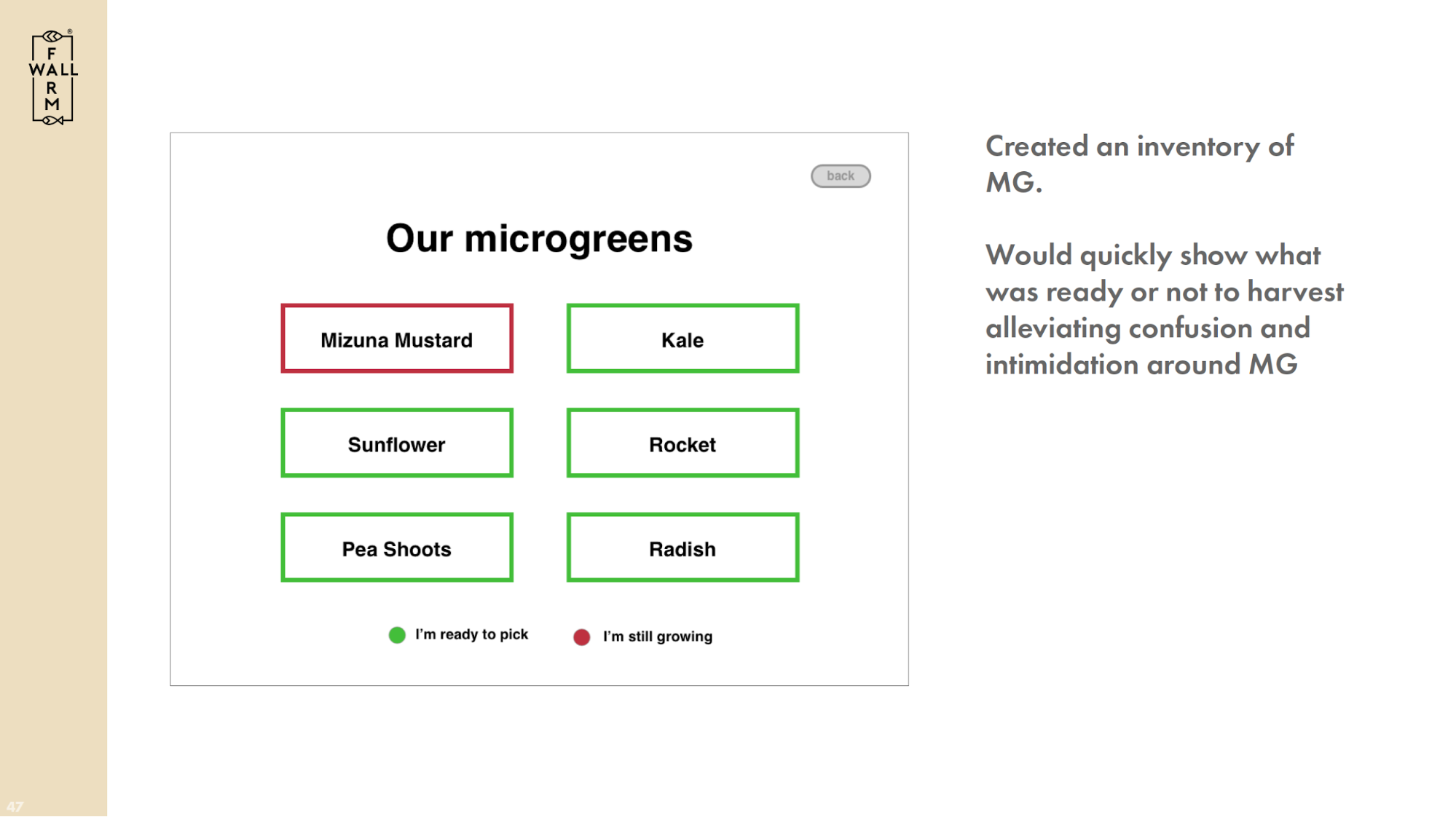
Above left: We made the focus of harvesting microgreens more obvious. Above right: We added a ‘traffic light system’ so Daisy knew when to harvest.
Round 3 iterations based on feedback
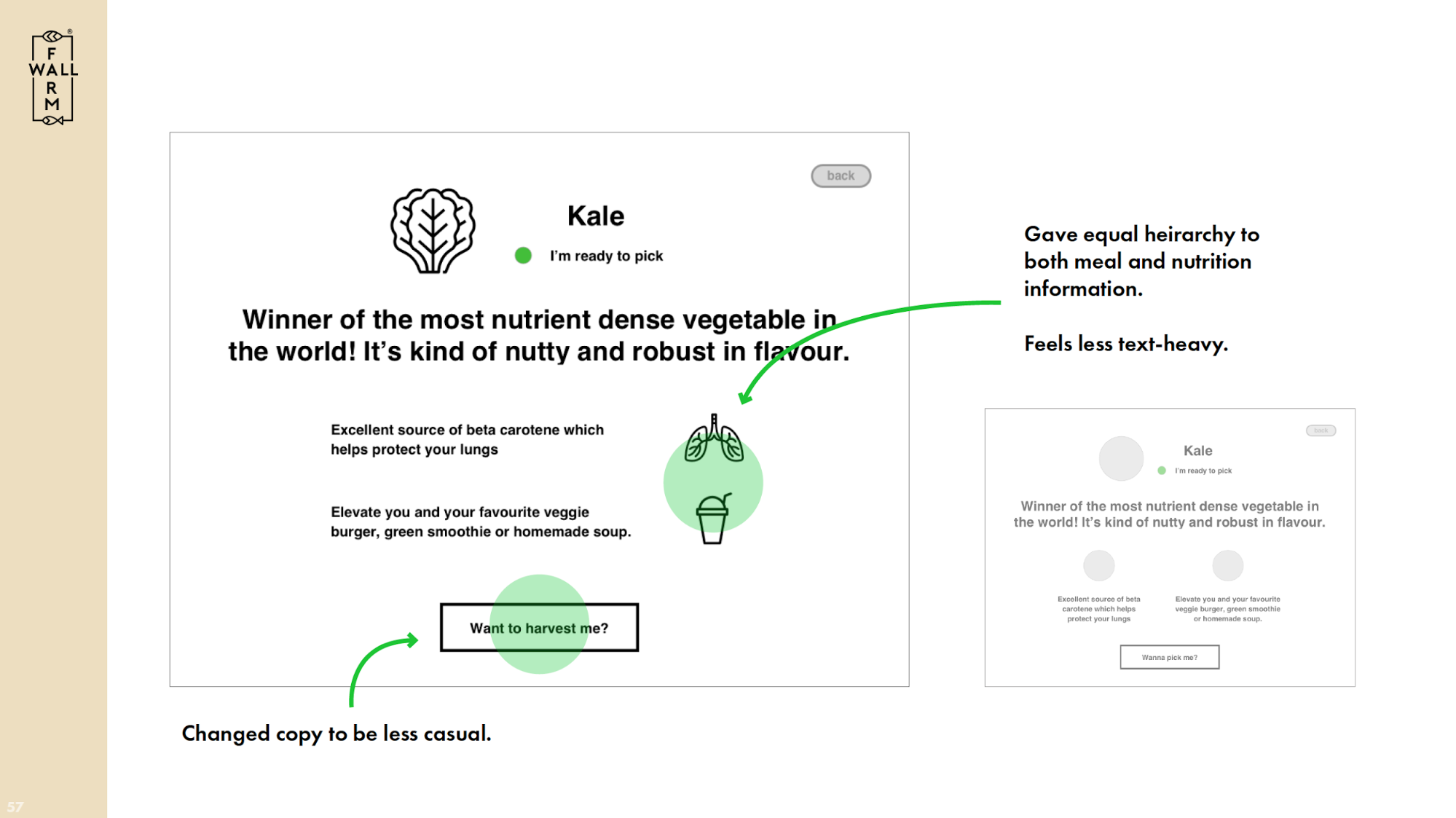
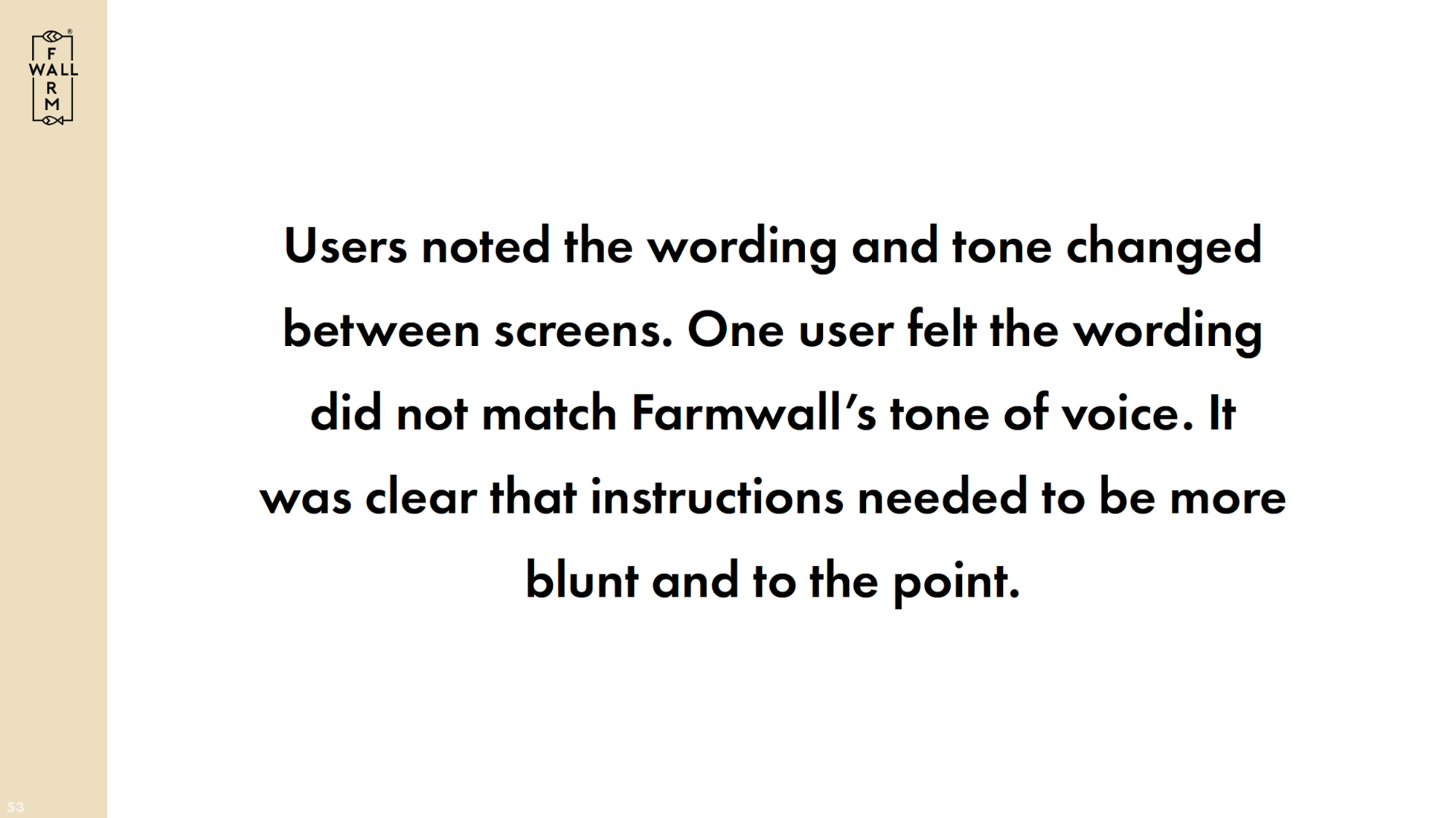
Above: We went through significant copy changes in our 3rd round of iterations.
How we solved the problem
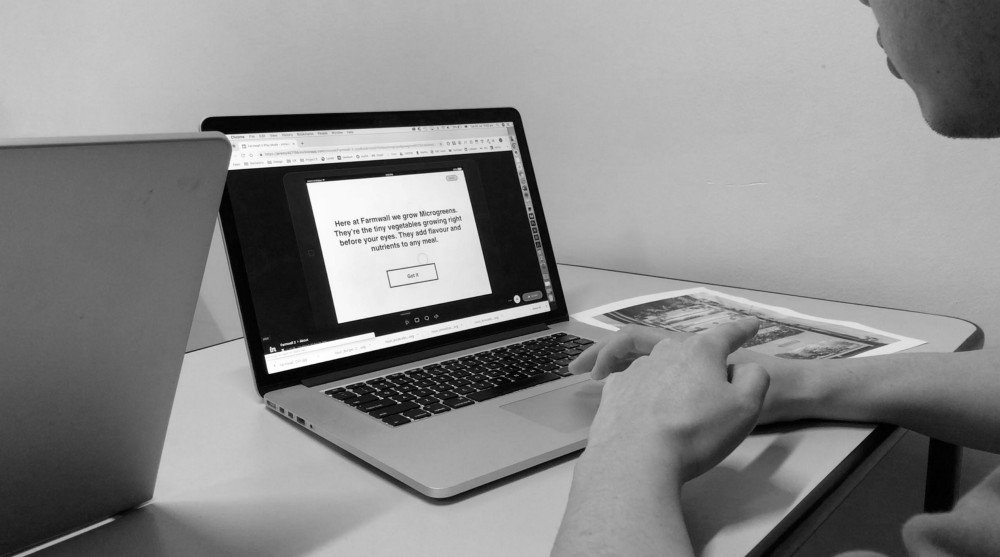
Above: Final usability test with an image of Farmwall for context
In our final usability test after 4 rounds of iteration, we found our new solution to be a huge success. We placed an image of Farmwall’s vertical farming unit in front of users who had never seen one before. We told them to start using the iPad that would sit next to the unit in any way they pleased. At the end of the test, we asked if they now knew what a microgreen was and if they could use one in a way that would benefit them. Every participant agreed.
Presenting our story and our proposed solution to our client Farmwall was well-received. They now felt like they needed to revisit their place in the market and redefine their users based on our research and findings.
Measuring engagement + the success of our solution
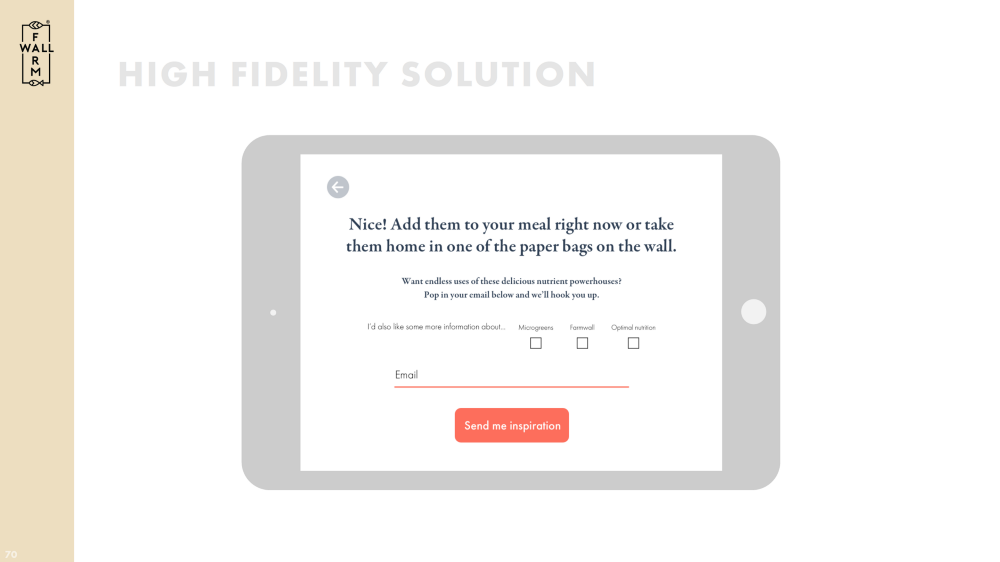
Above: Email capture screen — a way to quantifiably measure user interest with Farmwall
Our proposed digital solution not only took Daisy on an educational user experience but also allowed for Farmwall to measure engagement with their business. How? We can quantifiably measure if people are interested in Farmwall, their mission, and the product they sell, by capturing users’ emails. But of course, we can’t ask something of users without giving them something in return. And a microgreen isn’t enough. We know that Daisy is interested in nutrition, and health and food plays a huge role in that. We hypothesised that by giving Daisy a recipe, we could, in turn, receive her email. Daisy now has a simple, delicious, way to use her nutrient-dense microgreen she just learned how to harvest. Farmwall can now track interest with their business.
Learnings
Other than learning a lot about Microgreens — I identified with the 19/20 who did not know what a microgreen was before this project — I learned the importance of keeping thorough notes on iteration changes. This helped when it came time to wireframing, why we made the choices we did, and how our solution was informed by research. It also made for a viable proposed solution when presenting to Farmwall and taking them on their reimagined user experience.
Want to view the prototype?
View the prototype here.